New Motorcycle Rules in Spain 2026
Spain has approved important changes to its traffic regulations, and motorcyclists are one of the groups most affected.
The reform, approved by Royal Decree 518/2026 and published in the BOE on 26 June 2026, updates Spain’s General Traffic Regulations with a stronger focus on protecting vulnerable road users, including motorcyclists, cyclists, pedestrians and e-scooter users. The new rules will generally come into force on 1 October 2026.
Why is Spain changing the rules?
The Spanish government says the reform responds to a major change in mobility over the last 20 years. The focus is no longer only on roads and vehicles, but on people, especially those who are more exposed in the event of an accident.
Motorcyclists are specifically mentioned as a vulnerable group because accident figures involving motorcycles have remained significantly above the average in recent years. The aim is to reduce both the number of accidents and the severity of injuries.
What are the new rules for motorcyclists?
1. Protective gloves will be compulsory on interurban roads
Both motorcycle drivers and passengers will have to wear protective gloves when riding on interurban roads.
This applies to motorcycles, motorcycles with sidecars, three-wheeled vehicles, quadricycles, mopeds and quads. The Ministry of the Interior may later approve more detailed technical specifications for the gloves. Until those technical rules are published, riders may continue using protective gloves of the type commonly used today.
2. Closed footwear will be compulsory on all roads
Motorcycle riders and passengers must wear closed footwear that covers the whole foot on all types of roads, including urban roads.
This means riding in flip-flops, sandals or open shoes will no longer be allowed.
3. Helmets must be properly homologated
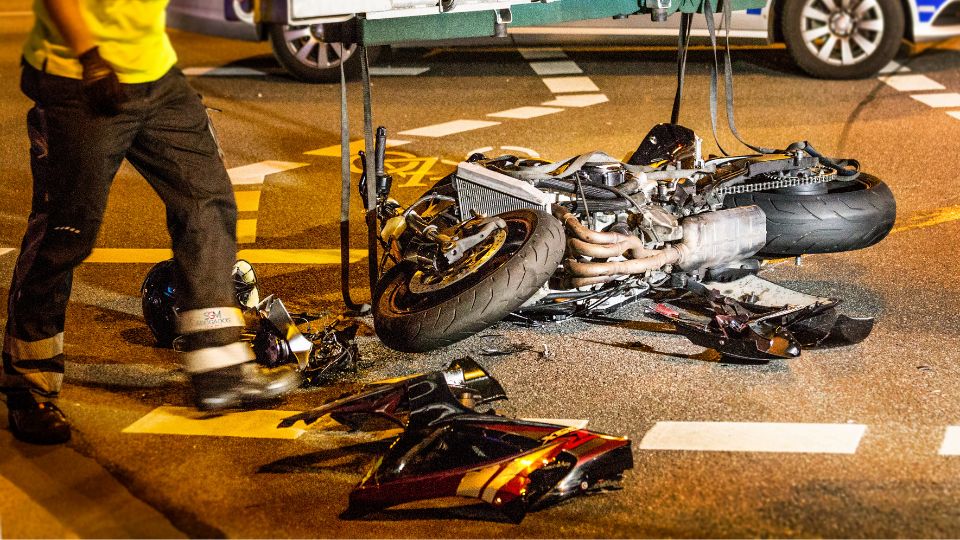
Motorcycle and moped users must wear homologated protective helmets, properly fastened, when riding on any type of road.
For moped users, the reform clarifies that helmets must be homologated and not merely certified. There is a one-year transitional period for moped riders who currently use certified helmets.
4. Motorcycles may use the hard shoulder in traffic jams, but only in specific cases
One of the most practical changes is that motorcycles may be allowed to use the hard shoulder when there is traffic congestion.
However, this is not a general right to ride on the hard shoulder. It will only be allowed where the section is signposted, and riders must not exceed 30 km/h.
5. Professional riders must wear a reflective vest
Riders who use motorcycles, mopeds, bicycles or e-scooters for professional activity must wear a reflective vest at all times.
Failure to comply is considered a serious offence and may result in a €200 fine.
When do the new motorcycle rules start?
The Royal Decree enters into force on 1 October 2026.
However, some technical details, especially regarding the required specifications for protective gloves, may be developed later by ministerial order. Until then, riders should use proper protective motorcycle gloves rather than casual gloves.
What are the fines?
According to the DGT, not wearing the required gloves on interurban roads or not wearing closed footwear is considered a serious offence, with a fine of €200. The same amount applies to professional riders who fail to wear the required reflective vest.
Practical advice for foreign residents and visitors in Spain
If you ride a motorcycle in Spain, whether you are resident, on holiday or travelling through the country, you should be prepared before October 2026.
Make sure you have:
Proper protective motorcycle gloves
Closed footwear that covers the whole foot
A homologated helmet
A high-visibility reflective vest if you ride professionally
Extra caution when using the hard shoulder, as it will only be legal in signposted congestion areas and at a maximum of 30 km/h
It is also important to remember that Spain’s traffic rules apply to foreign drivers while they are in Spain. Being a tourist or having a foreign driving licence does not exempt you from Spanish traffic regulations.
Final thoughts
These new rules are not just a technical update. They reflect a wider change in Spain’s approach to road safety: greater protection for vulnerable road users and stricter standards for those most exposed in an accident.
For motorcyclists, the key message is simple: from October 2026, riding safely in Spain will mean wearing the right protective equipment, not just a helmet.
At SGM Abogados, we recommend that foreign residents and visitors keep up to date with Spanish traffic regulations, especially when using motorcycles, e-scooters or bicycles, as the rules are becoming increasingly specific and fines can be significant.



About Post Author