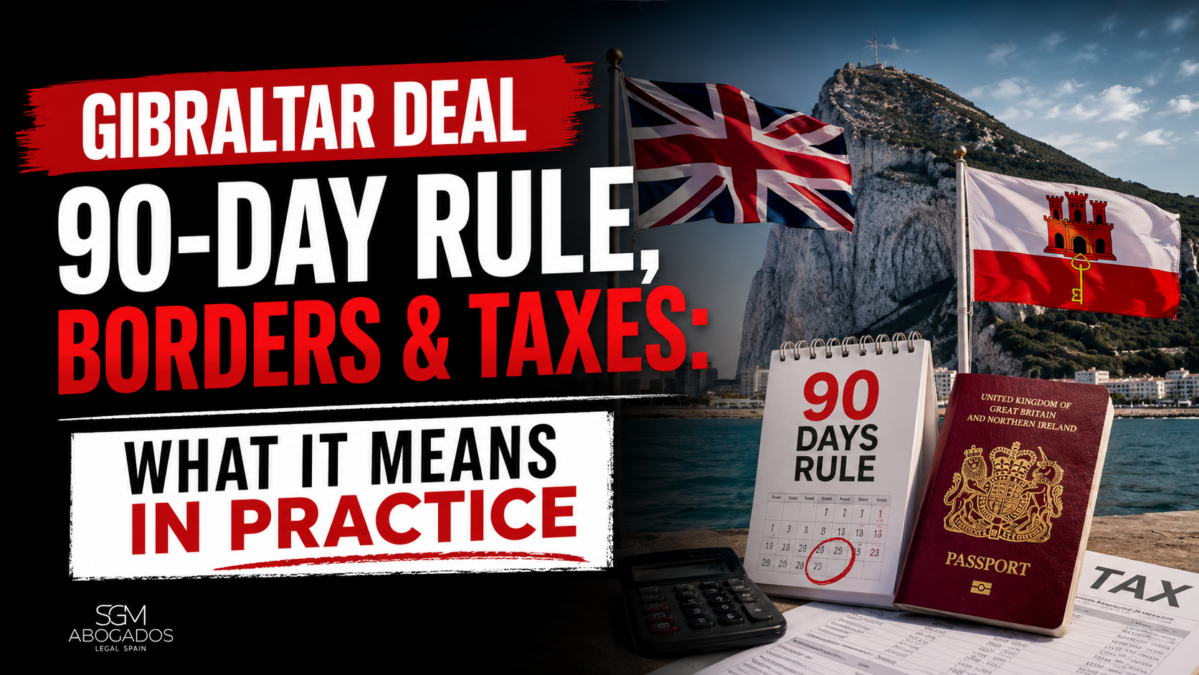
Gibraltar Deal – Borders Abolished
Gibraltar-Spain Border Controls Officially Abolished: What It Means for Residents, Workers, and Property Owners
After 118 years, the physical border between Gibraltar and Spain has been dismantled. As of today, Wednesday, July 15, 2026, the historic fence separating La Línea de la Concepción from Gibraltar has been fully removed, ending decades of queues, checkpoints, and uncertainty for the thousands who cross daily.
What Changed ?
The removal follows a treaty signed on Tuesday in Brussels between the European Union and the United Kingdom, with Gibraltar’s government also party to the agreement. EU Trade Commissioner Maroš Šefčovič took part in the signing alongside British and Spanish officials and Gibraltar’s Chief Minister, Fabian Picardo.
In practical terms, the deal brings Gibraltar into the EU’s Schengen free-travel area. Immigration checks have moved away from the land crossing and are now concentrated at Gibraltar’s airport and, where necessary, its port — eliminating the frontier delays that have long affected both residents and businesses.
It’s worth noting the treaty remains subject to ratification by the UK House of Commons and the European Parliament, so today’s changes are provisional, though already in effect on the ground.
Why It Matters
Gibraltar relies on around 15,500 workers who cross from Spain every day — roughly half its workforce — and the surrounding Campo de Gibraltar region has historically had one of Spain’s highest unemployment rates. For families, commuters, and businesses operating across the border, the end of physical checks removes a significant daily friction point.
Chief Minister Picardo described the change as removing “the physical barriers of a bygone era of friction” while retaining “the keys to our own front door” — a reference to the fact that UK sovereignty over Gibraltar is unaffected by the agreement.
To offset the loss of physical border controls, Gibraltar has increased its use of facial recognition technology at entry points, expanded CCTV coverage, and reinforced police, customs, and coast guard resources.
A Note of Caution: Sovereignty Remains Unsettled
While the border changes are significant, the underlying sovereignty dispute between Spain and the UK over Gibraltar has not been resolved — the treaty is explicitly “without prejudice” to either country’s legal position on the matter. Notably, the treaty gives Spain the power to terminate the agreement.
This is a point our clients with cross-border interests — whether in property, employment, or business — should keep in mind. Spain’s next general election is due by August 2027, and a potential right-of-centre coalition has already voiced opposition to the treaty’s terms. Political shifts could, in principle, affect the framework going forward.
What This Means for Our Clients
For those living, working, investing, or holding property in the Campo de Gibraltar area or in Gibraltar itself, today’s development is a positive step toward smoother daily life and reduced administrative friction. However, given the treaty’s provisional status and the unresolved sovereignty question, we recommend clients with ongoing cross-border arrangements — property transactions, employment contracts, tax residency matters — stay attentive to further developments as ratification proceeds.
If you have questions about how these changes may affect your specific situation, whether in property law, tax planning, or cross-border employment matters, our team at SGM Abogados is here to help.
This article is for informational purposes only and does not constitute legal advice. For guidance specific to your circumstances, please contact SGM Abogados directly.