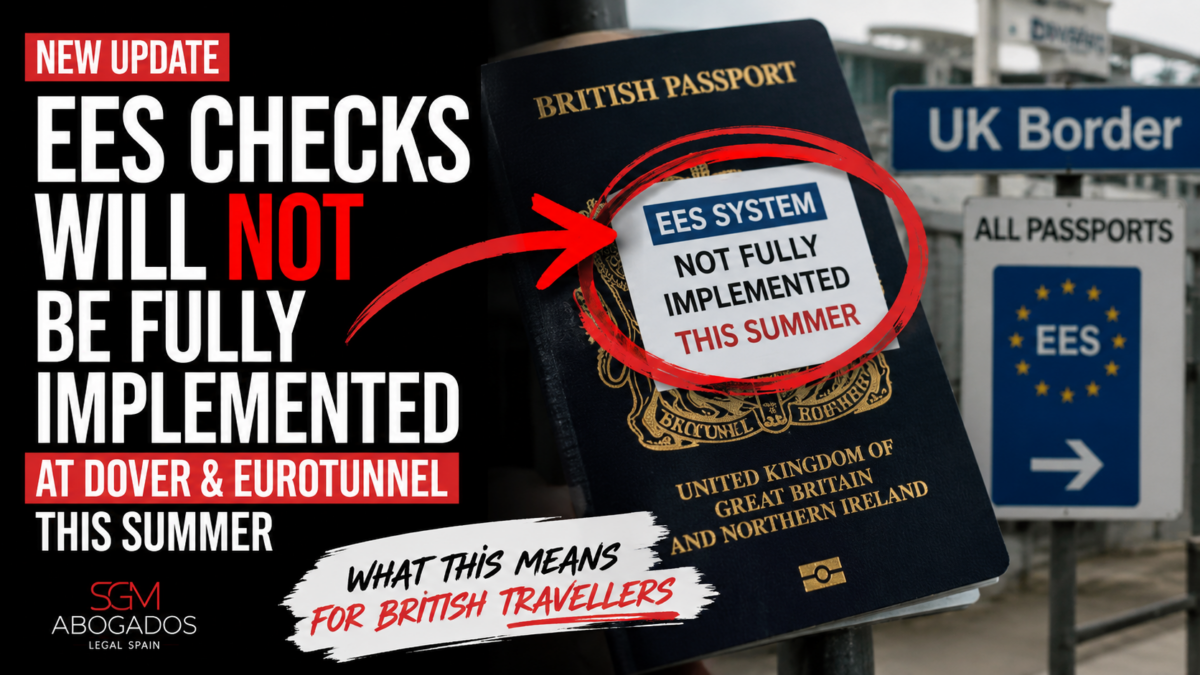
Europe’s new biometric border checks DELAYED
THE CHANNEL'S QUIET DELAY
Europe’s new biometric border checks were supposed to be fully live by now. At Dover, the Eurotunnel and Eurostar, they still aren’t — and that’s deliberate. Here’s what’s actually happening at the UK–France border this summer, and what it means if you’re crossing.
CROSSING STATUS BOARD — UK ⇄ FRANCE, SUMMER 2026
Eurotunnel / LeShuttle (Folkestone–Coquelles): ON HOLD
Digital file created manually by French border police (PAF); no biometric capture until after peak season.
Port of Dover (Car ferries): ON HOLD
£40m invested in 84 kiosks, but the back-end file-creation system isn’t ready yet.
Eurostar (St Pancras–Gare du Nord): ON HOLD
Kiosks installed at St Pancras but switched off. Full rollout expected post-summer.
Coaches & Freight (All UK–France crossings): FULLY COMPLIANT
Passengers disembark for manual biometric scans; has been fully EES-compliant since October 2025.
01 — WHY THE CHANNEL IS DIFFERENT
The EU’s Entry/Exit System, or EES, is meant to replace the old passport stamp with a digital record — fingerprints and a facial scan, logged the first time a non-EU traveller crosses into the Schengen Area.
It sounds simple enough at a normal airport, where passengers queue individually at a booth. But the UK–France border works differently. Because of a decades-old arrangement, French border checks happen on British soil — at Dover, at the Eurotunnel terminal in Folkestone, and at St Pancras station in London — rather than after arrival in France.
Combine that with the sheer volume of people who cross by car, coach and train each summer, and juxtaposed border control becomes the hardest possible place to introduce a new biometric system. The Port of Dover’s own chief executive had already warned of “repeated episodes of severe congestion” if nothing changed before the summer getaway.
“It’s not chaos, it’s just a very busy expected summer getaway period” — Port of Dover spokesperson
02 — WHAT’S ACTUALLY HAPPENING AT EACH CROSSING
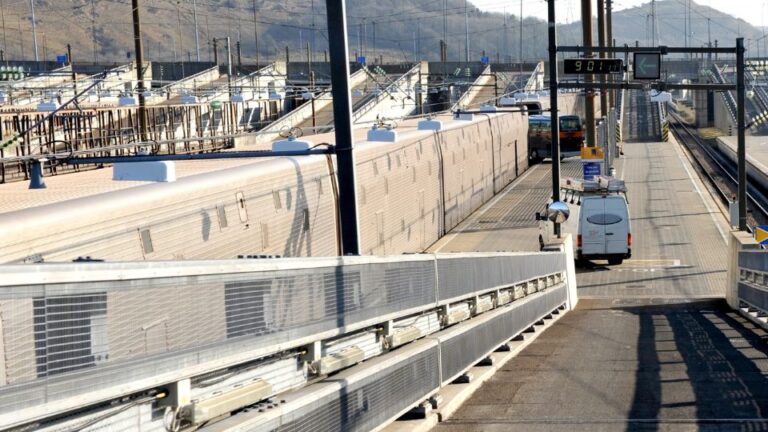
Eurotunnel customers travelling by car will notice nothing different this summer. LeShuttle passengers stay in their vehicles and proceed to French border police as before; officers create a digital EES file by hand, without capturing fingerprints or a facial image. Eurotunnel says it has already run live operational trials of the full biometric system and is waiting on the French authorities to confirm timing — expected after the summer peak.
At Dover, roughly £40 million has gone into new infrastructure, including 84 self-registration kiosks. The physical hardware is there; the back-end software that actually files the biometric data isn’t finished. The port says its usual summer congestion planning — done with French police and Kent County Council — remains in place regardless.
Eurostar is in the same position: check-in kiosks have been installed at St Pancras but aren’t switched on, for what’s described as the same underlying technical issue affecting Dover and the Eurotunnel.
The one group already living in the full EES future: coach passengers and freight drivers. They’ve been fully biometric-compliant since October 2025 — coach passengers disembark, pass through a manual passport-scanning desk, then reboard a coach that’s sealed with a police-recognised sticker.
FOR TRAVELLERS THIS SUMMER
- Car and Eurostar passengers cross as normal — no new biometric step yet.
- Dover advises arriving no more than two hours before your ferry departure.
- Use the main A20 and A2 routes into Dover to avoid clogging local Kent roads.
- Coach and freight travellers should expect the full EES process already in place.
03 — HOW WE GOT HERE
EES didn’t appear overnight. It has been rolled out in phases since 12 October 2025, with full implementation across Schengen’s external borders arriving on 10 April 2026. The rule allows countries to temporarily suspend checks if queues get too severe — a safety valve several have already needed to use.
Timeline:
- Oct 2025 — Phased EES begins. Coach & freight lanes first.
- 10 Apr 2026 — Full Schengen rollout. Queues spike EU-wide.
- Summer 2026 (now) — Channel checks stay manual.
- Post-peak — Biometric capture expected to activate.
04 — IT’S NOT JUST THE CHANNEL
The UK–France border isn’t the only pressure point. Since the April rollout, airports across Spain, Italy and Greece have seen some of the same strain. Palma de Mallorca reported two-to-three-hour queues in its first EES weekend, with industry groups warning that some UK-bound flights left partly empty because passengers were still stuck at passport control.
Airlines including Ryanair pushed EU governments to pause EES enforcement until after summer, arguing that kiosk shortages and untrained staff were driving the delays rather than the system’s design. Spain’s government instead opted for adjustments — hybrid manual-and-biometric lanes during surges — rather than a full suspension.
Experiences have varied a lot by airport and time of day: Madrid-Barajas and Málaga have generally fared better, while Barcelona’s El Prat has seen some of the roughest peak-hour waits. Industry trackers have listed Paris CDG and Geneva among the most consistently disrupted hubs in Europe this summer, with waits reported up to four hours at times.
Key figures:
- £70.5m — Combined UK government & industry investment across Dover, Eurotunnel and Eurostar terminals so far
- Oct ’25 — Coach and freight lanes have been fully EES-compliant since — nine months ahead of car and rail passengers
05 — WHAT COMES NEXT
Both the UK government and the European Commission have agreed to work together to keep travel “as seamless as possible” through the summer and into autumn — language that leaves plenty of room for the current manual workaround to continue a while longer. The honest answer is that nobody has published a firm date for full biometric capture at the Channel; every operator points to “after the peak summer period” without committing further.
Looking further ahead, EES is only the first layer. A separate pre-travel system, ETIAS, is expected to roll out later in 2026 with a transition period before it becomes mandatory in 2027 — meaning the Channel, and Europe’s borders generally, are still mid-way through a much longer digital overhaul.
Compiled for informational purposes · Not travel advice — check official Port of Dover, Eurotunnel and Eurostar channels before you travel