What Is the €3,000 Energy Efficiency Subsidy?
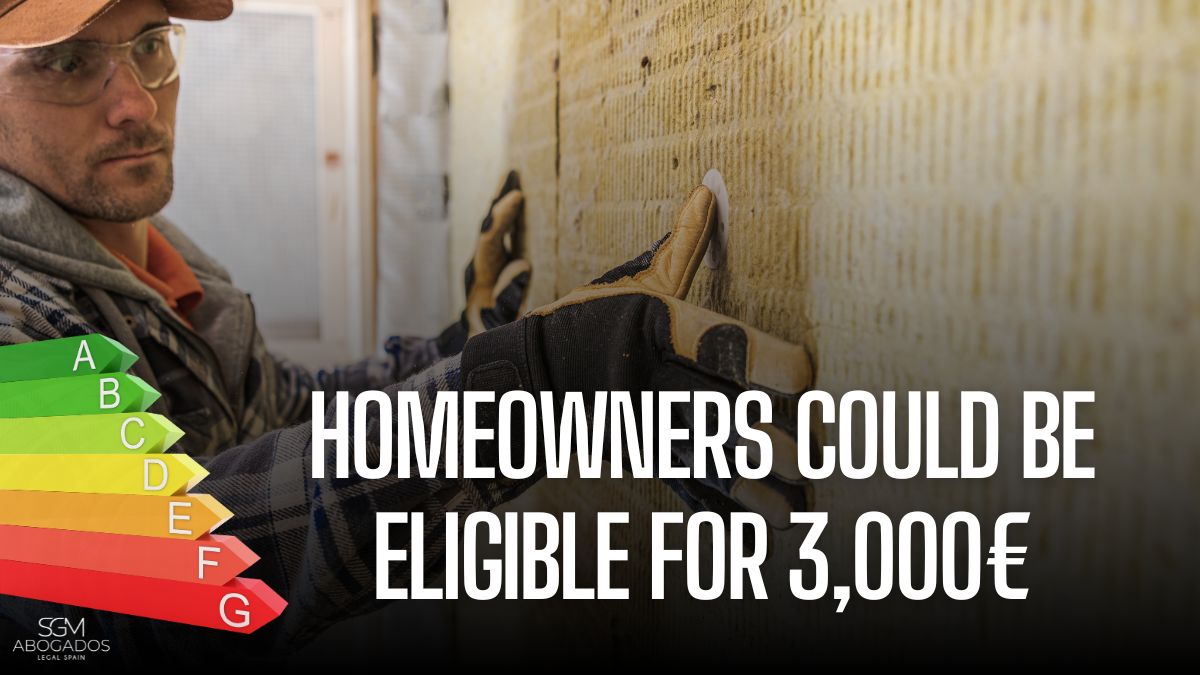
Spain currently offers a subsidy covering up to 40% of the renovation cost, with a maximum grant of €3,000 per property.
The scheme forms part of Spain’s Recovery, Transformation and Resilience Plan funded by the EU NextGeneration programme. The aim is to reduce energy consumption in older homes and improve the energy performance of residential buildings.
The grant is mainly aimed at works such as:
- Replacing old windows
- Improving insulation
- Installing more efficient heating systems
- Solar panel installations
- Aerothermal systems
- Roof and façade improvements
- Other renovations that reduce energy consumption
What Are the Main Requirements?
To qualify, the renovation must produce a genuine improvement in the property’s energy efficiency.
In most cases, this means achieving at least one of the following:
- A reduction of at least 7% in heating and cooling demand
- A reduction of at least 30% in non-renewable primary energy consumption
- Or improving the property’s energy rating to class A or B.
The property generally must also be:
- A habitual and permanent residence
- Owned by the applicant, or occupied by a tenant with owner authorisation
- Subject to renovation works costing at least €1,000.
Important: Energy Certificates Are Essential
One of the biggest mistakes property owners make is starting works before understanding the paperwork requirements.
In most cases, you will need:
- An energy certificate before the works
- A second certificate after completion
- Technical documentation proving the improvement achieved.
Without this documentation, the subsidy or tax deduction can be refused.
This is particularly important in Spain because many owners begin renovations informally through local builders without first checking whether the works comply with the subsidy requirements.
Can Foreign Owners Apply?
This is where things become more nuanced.
Many of the direct grants are aimed primarily at habitual residences in Spain. That means some holiday homes or purely investment properties may not qualify for the direct subsidy itself.
However, depending on the type of property and the owner’s tax situation, foreign owners may still potentially benefit from:
- regional grants,
- community building rehabilitation schemes,
- solar incentives,
- local IBI tax reductions,
- or IRPF tax deductions where applicable.
This area requires careful review because eligibility can vary significantly depending on:
- whether the owner is resident or non-resident,
- whether the property is rented,
- the autonomous region,
- and the exact type of renovation being carried out.
Additional Tax Advantages Many Owners Miss
The €3,000 grant is only part of the picture.
Spain has also extended several income tax deductions for qualifying energy-efficiency works through 2026.
Depending on the level of improvement achieved, owners may qualify for:
- 20% deduction
- 40% deduction
- or even 60% deduction for larger community rehabilitation projects.
Some municipalities additionally offer:
- reductions of up to 50% on IBI,
- and reductions on ICIO construction tax for renewable energy installations.
Many property owners never claim these additional benefits simply because nobody informs them they exist.

Timing Matters
Another important point: these grants are regional.
Applications are managed by each autonomous community separately, and deadlines vary. In many regions, funds are distributed until the available budget is exhausted.
In practice, this means waiting too long can result in losing access to the subsidy altogether.
There is also usually a deadline to complete the works, often within 12 months from approval of the aid.
Legal and Practical Issues to Check Before Renovating
Before starting works in Spain, property owners should also verify:
- Whether community of owners authorisation is needed
- Whether planning permission or a declaración responsable is required
- Whether the installer is properly registered
- Whether the invoices comply with subsidy requirements
- Whether the works could affect the legal description of the property
- Whether the renovation may trigger future tax implications or cadastral updates
This is particularly important for foreign owners unfamiliar with Spanish administrative procedures, where errors in documentation can easily delay or invalidate a claim.
Final Thoughts
Spain is clearly pushing towards more energy-efficient housing, and 2026 may be one of the last major opportunities to benefit from these EU-backed incentives before funding reduces or changes.
For many owners, the combination of:
- direct grants,
- tax deductions,
- lower energy bills,
- and increased property value
can make these renovations financially very attractive.
However, the legal and administrative side is often more complex than people expect, especially when dealing with regional rules, energy certification requirements and tax implications.
Before committing to any renovation project, it is worth reviewing both the legal and tax position carefully to ensure the works qualify and the correct documentation is prepared from the start.
The official Government application page can be found HERE